
Care and MaintenanceEasy Care Tips: Regularly Clean Your Stone
Simple cleaning may reduce the frequency in which you must complete more involved maintenance routines. For this reason, sweeping and rinsing your stone is important. How often you do these tasks depends on a number of variables, including season, location, and frequency of use. Read on to learn the best cleaning methods for your unique installation.
-
Dust mop floors frequently using a clean non-treated dry dust mop. Lightly mop with warm water as needed.
-
We recommend periodic sweeping to prevent fallen leaves, flowers, or grass clippings from staining your stone. Sand, dirt, and grit are abrasive and can damage natural stone. Rinsing with a garden hose with a higher-pressure attachment, along with a scrubbing broom, works well for periodic cleaning.
-
We do recommend that pressure washing be performed by a stone cleaning professional to avoid causing permanent damage to both your stone and joint or grout lines. If you do your own pressure washing, be sure to keep the pressure under 1,000 psi per 6-8 gallons per minute. A thorough pressure-wash cleaning at least every five years (or as needed) does wonders to rejuvenate the stone’s appearance.
-
Mats or area rugs inside and outside an entrance will help to minimize the sand, dirt and grit that may scratch the stone floor. Be sure that the underside of the mat or rug is a slip resistant surface. Be sure to keep the underside of any mat or rug dry and clean to avoid grime or mildew staining.
-
Outdoor planters can cause staining to your stone if the planter is frequently draining water that pools under the planter without the opportunity to fully dry. Placing a protective base under your planter to hold the water can prevent this damage. Alternatively, metal planters that may rust can also stain the stone (as can outdoor furniture), and care should be taken to avoid this exposure by applying protective bases/feet.
-
If vacuums or pressure washers are used, be sure that the metal or plastic attachments do not scratch the surface of the stones – this can especially be an issue when tools or attachments are worn. Also be sure to protect your stone from outdoor grills scraping across the stone, as well as charcoal stains or food oil spills.
-
Stone that is constantly wet can develop mold & mildew stains, and in excessive cases, effect the integrity of the stone installation. Efforts should be made to redirect water in any areas where it tends to pool or remain wet.
-
Blot the spill with a paper towel immediately. Do not wipe the area, it will spread the spill. Flush the area with water and mild soap and rinse several times. Dry the area thoroughly with a soft cloth. Repeat as necessary.
-
We have had great success using small hand-steamers with a brush attachment (these can be found on Amazon). This method penetrates the stone with boiling water which helps to lift stains so that they can be scrubbed away. **We recommend trying this method prior to any efforts involving chemical cleaners.
-
We highly recommend Clean N’ Seal of Minnesota for all of your professional stone cleaning and restoration needs. Take the guesswork and labor out of maintaining, cleaning and sealing your stone by hiring a trusted expert who knows exactly what methods and products to use.
Stain Identification Guide
Identifying the type of stain on the stone surface is the key to removing it. Stains can be oil based, organic, metallic, biological, ink based, paint based, or acid based. If you don’t know what caused the stain, consider likely staining agents that may have been present.
The following sections describe the types of stains you may have to deal with and the appropriate household chemicals to use and how to prepare and apply a poultice to remove the stain.
Natural stone is easy to clean and maintain. Contact your installer or a stone restoration specialist for problems that appear too difficult to identify or handle. The service of a competent pressure cleaning and sealing company familiar and experienced with cleaning and maintaining natural stone is always an advantage. Take care not to remove grout or joint filling material.
-
Examples: Grease, plumbers’ putty, tar, cooking oil, milk, cosmetics
An oil-based stain will darken the stone and normally must be chemically dissolved so the source of the stain can be flushed or rinsed away. Clean gently with a soft, liquid cleaner with one of the following: household detergent, mineral spirits or acetone.
-
Examples: Coffee, tea, wine, fruit, tobacco, paper, food, urine, leaves, bark, bird droppings
May cause a pinkish-brown stain and may disappear after the source of the stain has been removed. Outdoors, with the sources removed, sun and rain action will generally bleach out the stains. Indoors, clean with 12% hydrogen peroxide (hair bleaching strength) and a few drops of ammonia.
-
Examples: Iron, rust, copper, bronze
Iron or rust stains are orange to brown in color and follow the shape of the staining object such as nails, bolts, screws, cans, flower pots, metal furniture. Copper and bronze stains appear as green or muddy-brown and results from the action of moisture on nearby or embedded bronze, copper or brass items. Metal stains must be removed with a poultice. Inquire with your ORIJIN Sales Rep for available poultice cleaners.
Deep seated, rusty stains are extremely difficult to remove and the stone may be permanently stained.
-
Examples: Algae, mildew, lichens, moss, fungi
Clean with diluted cleaning solution. Use a ½ cup of any of the following: ammonia, bleach, or hydrogen peroxide and a gallon of water. Reminder: do not mix beach and ammonia.
-
Small amounts can be removed with lacquer thinner or scraped off carefully with a razor blade. Heavy paint coverage should be removed only with a commercial “heavy liquid” paint stripper available from hardware stores and paint centers. These strippers normally contain caustic soda or lye. Do not use acids or flame tools to strip paint from stone. Paint strippers can etch the surface of the stone; re-polishing may be necessary. Follow the manufacturer’s directions for use of these products, and flush the area thoroughly with clean water. Protect yourself with rubber gloves and eye protection, and work in a well-ventilated area. Use only wood or plastic scrapers for removing the sludge and curdled paint. Normally, latex and acrylic paints will not cause staining. Oil-based paints, linseed oil, putty, caulks, and sealants may cause oily stains. Refer to the section on oil-based stains.
-
What to look for: A white powder that may appear on the surface of the stone
Efflorescence is caused by the deposition of mineral salts carried by water from below the surface of the stone. When the water evaporates, it leaves the powdery substance. If the installation is new, dust mop or vacuum the powder.
You may have to do this several times as the stone dries out. Do not use water to remove the powder: it will only temporarily disappear. If the problem persists, contact your installer to help identify and remove the cause of the moisture. *Sometimes a white film or haze residue can occur from certain polymeric sand (joint material) products, or the improper installation or overuse of these products.
Cleaning With the Right Solution
Neutral cleaners are ideal for natural stone, as acidic and strong alkaline agents can cause serious damage if not used by an expert (please see warning below). Whether you’re washing the entire surface or spot cleaning, use a pH-neutral product.
Before using any product, test the product on a piece of stone leftover from your installation. Allow the cleaner to completely dry — doing so will reveal whether or not the cleaner causes erosion or discoloration.
Foods and drinks with a high acidic content may damage your tile. Be extra wary of spilt orange juice, tomatoes, etc., always cleaning them right away.
We have had great success using small hand-steamers with a brush attachment. This method penetrates the stone with boiling water which helps to lift stains so that they can be scrubbed away.
**We recommend trying this method prior to any efforts involving chemical cleaners.
Poultice Stain Remover is a dual purpose, non-acidic stain remover. It is an absorptive clay that is designed to remove deep-set oil and grease stains without scrubbing.
Before cleaning the pavers with a pH-balanced neutral cleaner and warm water, sweep or dry mop them. This gets dirt and debris out of the way, making scrubbing an easier task. When you wash the pavers, use a mild liquid dishwashing detergent and warm water. Scrub the surface with a sponge or sponge mop. You may have to use a hand cloth to work tougher areas. Rinse the pavers and let them dry.
Similar to any item cleaned in your home, an excessive concentration of cleaner or soap may leave a film. Follow manufacturer recommendations.
Use a clean rag mop on interior floors and a soft cloth or sponge for exterior surfaces for best results.
Rinse the surface thoroughly after washing with the soap solution and dry with a soft cloth.
Change the rinse water frequently.
In the bath or other wet areas, soap scum can be minimized by using a squeegee after each use. To remove soap scum, use a non-acidic soap scum remover or a solution of ammonia and water (about 1/2 cup ammonia to a gallon of water). Frequent or over-use of an ammonia solution may eventually dull the surface of some stone types.
In outdoor pool, patio or hot tub areas, flush with clear water and use mild bleach solution to remove algae or moss.
Products containing lemon, vinegar or other acids may dull or etch (permanently erode) calcareous stones.
Scouring powders or creams often contain abrasives that may scratch certain stones.
Many commercially available rust removers (laundry rust stain removers, toilet bowl cleaners) contain trace levels of hydrofluoric acid (HF). This acid attacks silicates in addition to other minerals. All stones, including granite and quartzite, will be attacked if exposed to HF.
Do not mix ammonia and bleach. This combination creates a toxic and lethal gas.
Natural Stone Is Easy to Clean and Maintain!
Call your professional stone supplier, installer or a restoration specialist for problems that appear too difficult to identify or handle. The service of a competent pressure cleaning and sealing company familiar and experienced with cleaning and maintaining natural stone is always an advantage. Take care not to remove grout or joint filling material.
Muriatic Acid Warning
DO NOT USE ACID ON YOUR NATURAL STONE. The use of Muriatic Acid as a cleaning agent is NOT recommended for natural stone, despite the popular misunderstanding that this is an appropriate product for use with Masonry. This product was originally designed for pickling steel! Muriatic Acid is a very harsh and corrosive chemical that can quickly and permanently damage your stone.
Salt & De-icing Disclaimer
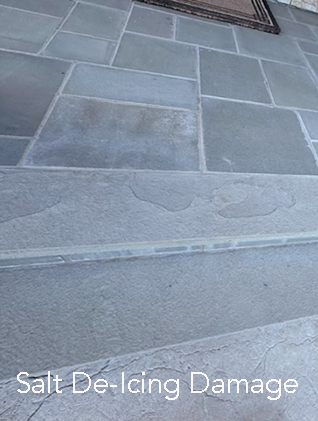
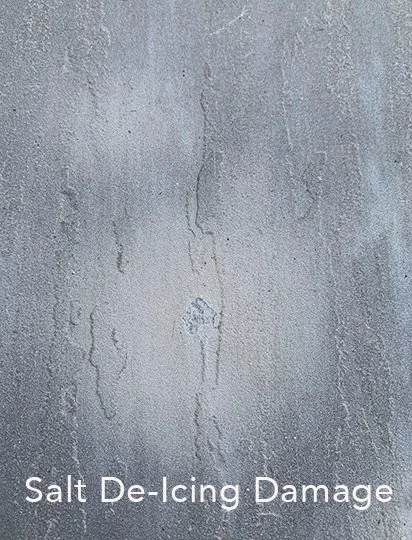
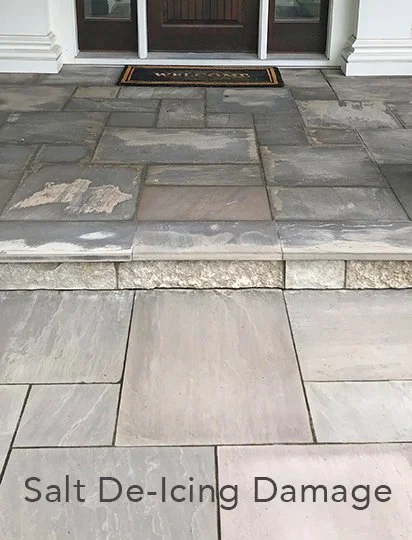
Although our winter season can make snow and ice management challenging, we urge our clients to avoid using salt and de-icing products on natural stone, as it is adversely and permanently affected by these chemicals. Salt products are very corrosive and can aggressively degrade, discolor and cause spalling to the stones surface – even after minimal exposure. The degree at which these products affect stone varies greatly depending on the species of stone, the type of product applied, the amount and frequency of product applied, the environment, etc. Because these factors are virtually impossible to measure or regulate, we cannot recommend any salt de-icing product with full assurance that it will not permanently damage your stone.
We do recommend and sell a product that is a green and safe alternative to salt deicers. ecoTRACTION™ is a non-toxic natural volcanic mineral that is chemical, chloride, and dye free. In addition to being non-corrosive to your stone, it will not harm your pets or landscape, nor compromise watersheds. ecoTRACTION provides high-traction on ice & snow instead of melting. The granular material turns green when applied, creating a visual safety zone. Unlike ice melters, ecoTRACTION works to -58F!
Sealing Your Stone
Natural stone does not specifically require sealing and are left unsealed on the majority of projects. Natural stone is meant to last for a very long time. Natural stone pavers, tile and counters are porous to a degree, and sealing may be considered a benefit in some cases; to protect against discoloration, water absorption, harsh environmental conditions and to make maintenance easier. ORIJIN has very specific sealer recommendations regarding each different type of stone. Please reach out to your ORIJIN sales representative for specific product recommendations.
Important Notes Regarding Sealers
On-site testing should be conducted on a small test area of your stone to determine the most appropriate product prior to application to the entire project. Please note that in some cases, sealers can cause a possible darkening of the stone. Testing a sample of the product will reveal whether or not this is an issue.
Always ensure that both stone surface areas, as well as joints, are completely clean and dry prior to application. See product label for further application instructions.
Sealing should never be considered as a means of stopping or deterring efflorescence (a crystalline layer of salt). Efflorescence can migrate to the surface of the paver by capillary action and be trapped below the surface of the sealer accentuating the problem.
Apply all products in accordance with the manufacturer’s recommendation provided on container labels and within product data sheets.
Sealing also assists with the harsh effects of a northern freeze & thaw season. “Impregnating” stone sealers do not actually “seal” the stone, but actually add a repellent quality to the stone. Sealing does not make the stone stain proof; rather it makes the stone more stain resistant.
It is important to note that most sealers are not categorized as non-toxic. This should be considered in terms of where and how the stone is used. For instance, if a sealer is applied in a food preparation area, such as an outdoor countertop, be sure that it is non-toxic and safe for use.
We recommend that travertine pavers are sealed, because if left untreated, they are more susceptible to corrosion damage and staining due to their porous nature. We suggest you seal travertine with a water-repellent impregnating sealer to extend the life of your stone.
Prior to application of any product, it is imperative to determine whether or not the stone was previously sealed before application of further products. If it was previously treated, consult with your ORIJIN representative for guidance, as additional measures may be required. Some cleaners do contain ACID, which can permanently etch and/or damage stone if not used with extreme CAUTION. Be sure to closely follow all application instructions, including the dilution recommendations. For all cleaners and sealers: Do not over apply.
Please note that ORIJIN STONE is not responsible for any adverse reactions that may arise from the use of any applied product to your stone; including any products that we sell or recommend. Unless the recommended products were applied in-house at ORIJIN STONE prior to stone delivery, we cannot be responsible for any adverse or unsuccessful results from cleaner or sealer applications, due to the many uncontrollable factors related to both proper application, dilution methods and the varying characteristics of natural stone.
NATURAL STONE DISCLAIMER
Buyer acknowledges that stone is a natural substance, formed within the earth, and that different types of stone, as well as individual stones within any given type, may vary in texture, color, thickness, density, durability or fitness for a particular use or purpose. Because natural stone may chip, peel, flake, bleed, stain, oxidize or otherwise deteriorate over time, all of these attributes should be considered when using stone, especially in any exterior application subject to moisture. Buyer acknowledges that Seller has no control over Buyer’s selection or use of any stone, and that exposure to weather, installation techniques or preservative measures used by Buyer or its installer all may affect the long-term performance and durability of any stone selected and/or installed by Buyer. Ice-melting salt, other ice-melting products and Muriatic Acid cleaners can permanently damage stone. We recommend that you DO NOT use these products on or near natural stone. ORIJIN STONE is not responsible for any damage that results from the use of these or any products applied to your stone. Especially in the case of cut natural stone (patterned, steps, etc.), we recommend using a stone sealer to assist with durability and longevity. We do not offer any guarantee or warranty for any of the product sealing, preservative or cleaning products that we recommend. Buyer’s purchase of stone from Seller constitutes Buyer’s acknowledgment of the above, and acceptance of the risks inherent in the use and installation of this natural substance and a waiver of any and all claims which Buyer may have against Seller arising from the chipping, peeling, flaking, staining, bleeding, oxidation, or other deterioration of this natural substance.